The first speakers of this weeks’ Warsaw XVIII Conference “Indoor Air Quality Problems in Poland”, strongly emphasized the importance of a model of cooperation in understanding, describing and implementing indoor air quality (IAQ) regulations in public buildings.
Prof Pawel Grzesiowski, spoke about the importance of the IAQ for public health (also in the context of schools), emphasized the importance of dialogue between various expert groups. He referred to the work of a team of experts who developed recommendations for the design and implementation of technical solutions supporting IAQ in new schools.
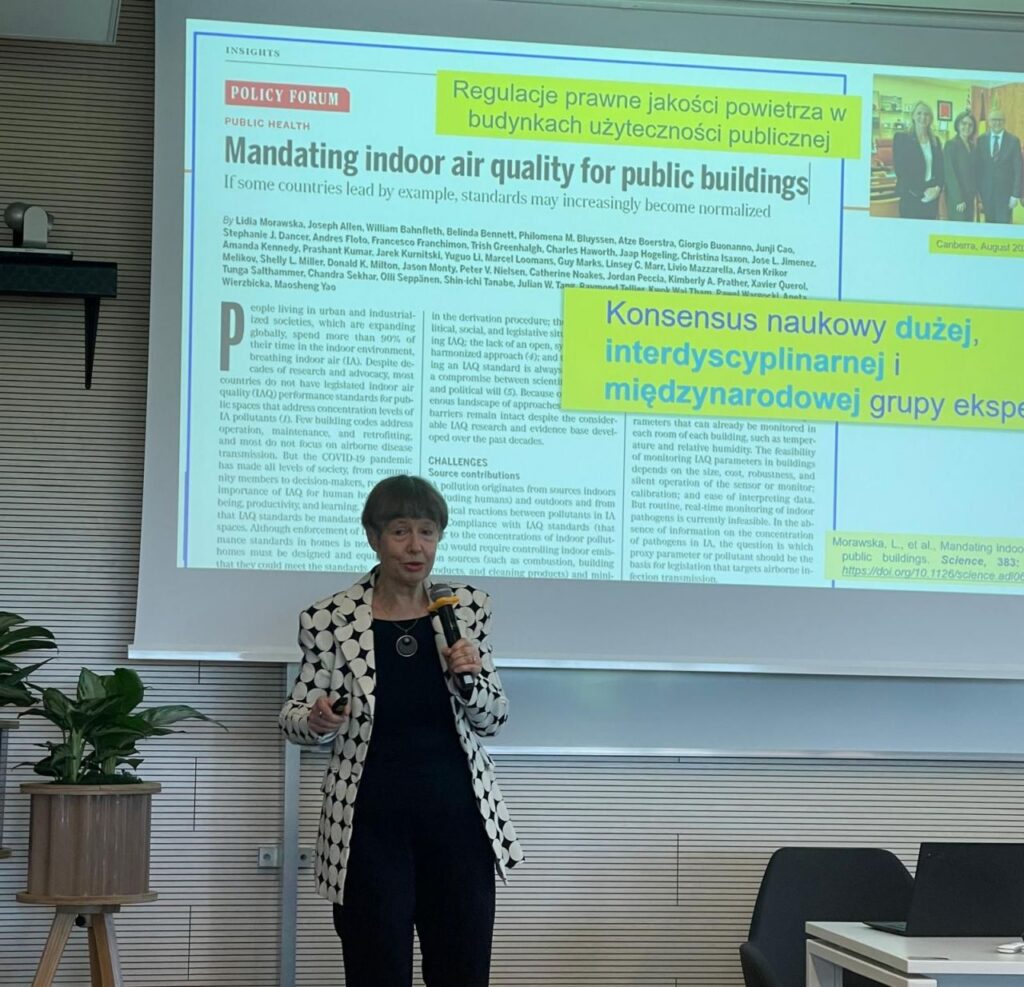
D/Prof Lidia Morawska spoke about the history – past, present and future work to promote good IAQ in our public buildings. She pointed to three main lessons from the COVID-19 pandemic:
👉 Interdisciplinary coherent (consensus!) scientific knowledge is necessary, which has a real impact on action.
👉 Ventilation must go far beyond “open the window” – there is no simple solution here.
👉 IAQ must be regulated on the basis of legal regulations as a measure to protect human health.