Thrive Forum: “Indoor air quality: dampness and mould” | 16–18 September 2026
We would like to invite you to the Thrive Forum “Indoor air quality: dampness and mould” in collaboration with the Queensland University of Technology, Charles...
We would like to invite you to the Thrive Forum “Indoor air quality: dampness and mould” in collaboration with the Queensland University of Technology, Charles Darwin University and Mycotec. The Forum will be held from 16–18 September 2026 in Darwin, Australia.
Forum details:
🗓️ 16 September, 5:00pm – 9:00pm | Pre-Forum Networking Event (In Person Only)
🗓️ 17 September, 9:00am – 4:40pm | Thrive Forum: “Indoor air quality: dampness and mould” (In Person & Online)
🗓️ 18 September, 9:00am – 12:00pm | Presentation of the Draft of the Australian Mould Guidelines 2026 (In Person & Online)
*Please note that the times above are in Darwin local time.
📍Venue: Charles Darwin University, Waterfront Campus, 21 Kitchener Drive, Darwin City NT
💻Online: a Zoom link will be included in the agenda for the 17 & 18 September Events
📝 Register for the Forum Here
Please note: once your registration has been processed by the team, you will received an email confirmation, and calendar invitations will follow.
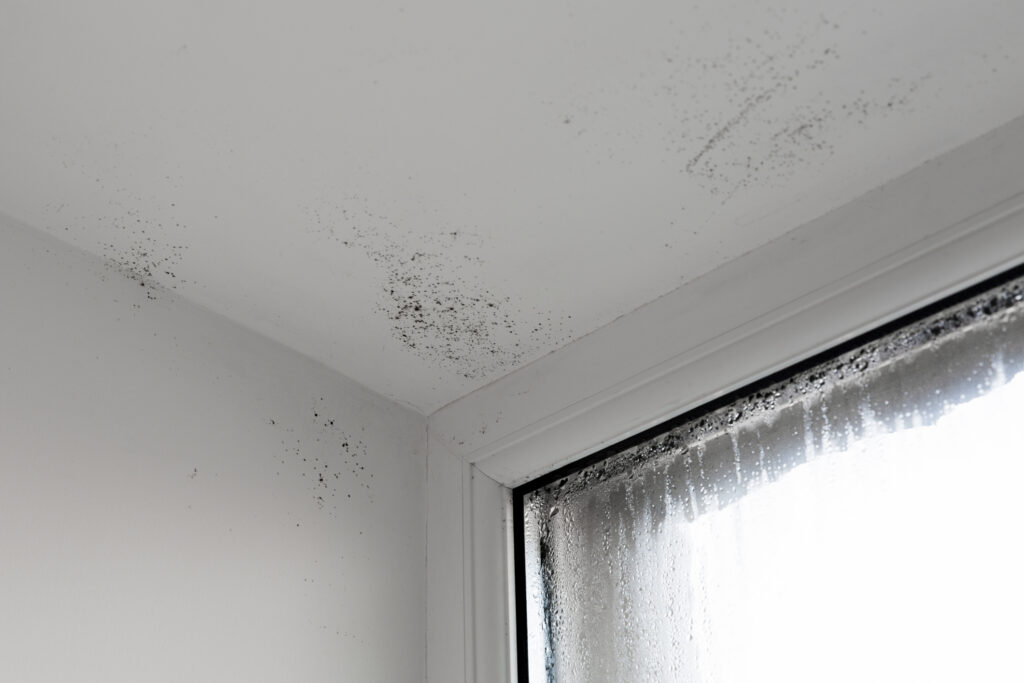
Background: Indoor air quality (IAQ) and its importance to human health have been studied for decades by experts worldwide across scientific, engineering, public health, and related disciplines. As a result of these efforts, scientific knowledge regarding every aspect of the building-person-environment system has expanded enormously. However, mere understanding is not enough to ensure the optimal functioning of a complex system. Many of the pollutants we inhale indoors originate outdoors, but there are also numerous pollutants originating from indoor sources, processes and occupants and their activities. One such pollutant is mould.
The World Health Organization’s Guidelines for Indoor Air Quality: Dampness and Mould (2009) highlighted that “the presence of many biological agents in the indoor environment is due to dampness and inadequate ventilation. Excess moisture on almost all indoor materials leads to the growth of microbes, such as mould, fungi, and bacteria, which subsequently emit spores, cells, fragments, and volatile organic compounds into the indoor air.” It is well established that dampness and mould in buildings negatively affect occupant health, causing asthma, allergic reactions, infections, and respiratory symptoms, as well as other clinical conditions. Dampness and mould problems are particularly severe in tropical climates. Identifying the problem—dampness and mould in building—is the first and essential step toward addressing it; however, it is not the only one. The subsequent issues to be addressed include: what to do, what tools to use, who should perform the task, and how to integrate it into a holistic approach to IAQ and the building-person-environment system.
In the tropical environment of Australia’s Northern Territory, dampness and mould have been identified as significant issues. The Northern Territory Government is committed to addressing these matters and, more broadly, ensuring healthy indoor air quality. Tackling these challenges requires science-based, context-specific prevention strategies—particularly those suited to tropical climates. To this end, the forum aims to discuss several key issues:
- Current lines of research in Australia: what are we learning about IAQ and mould.
- What options exist to protect community health from mould?
- How can indoor environments be optimized in terms of indoor air quality, thermal comfort, and reduction of dampness?
- IAQ: a challenge for the government.
- How do professions associations and organisations influence measures regarding IAQ and mould control in Australia?
This interdisciplinary forum will bring together experts from various fields, such as architecture, building engineering, air quality, microbiology, public health, and government.
The detailed agenda will be provided soon.
For more information how to get to Darwin Waterfront: https://www.cdu.edu.au/locations/darwin-waterfront
To download the campus map: https://www.cdu.edu.au/files/2020-10/AA_PLAN_Waterfront.pdf
A public bus stop is located in front of the CDU’s Waterfront Campus Building on 21 Kitchener Drive, opposite the WWII oil tunnels. There are also more buses available a short walk away, opposite Brown’s Mart and Civic Park in the city.
To keep up-to-date with our activities and for further updates about the Forum, please follow us on LinkedIn
Regards,
THRIVE Management Team